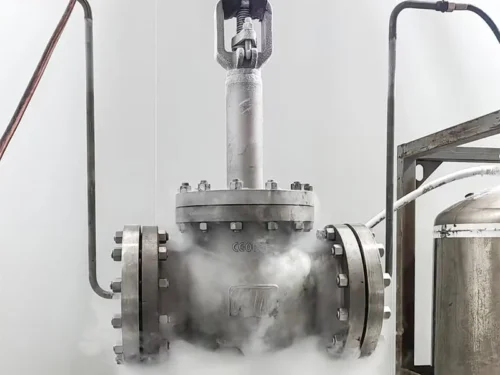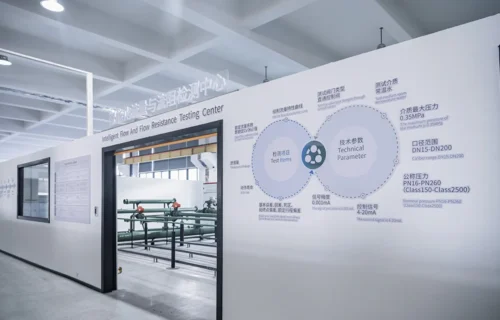
When it comes to industrial valves, one valve that cannot be overlooked is the control valve. Control valves play a crucial role in various industrial processes, responsible for regulating the flow of fluids such as gases, steam, water, and chemicals. Their primary function is to manage these fluids, keeping process variables like pressure, temperature, and liquid level close to predetermined ideal values, thereby ensuring the efficient operation of the system.
As industries increasingly demand higher precision and performance, it becomes essential to gain an in-depth understanding of the various aspects of control valves. Whether it is maintaining temperature and pressure or ensuring process stability during fluctuating operating conditions, control valves play an indispensable role in optimizing system functionality.
Composition of Control Valve
It consists of two parts: the actuator and the valve body components. Valve accessories include: filter pressure reducing valve, electric valve positioner, handwheel mechanism, valve position switch, valve position transmitter, pneumatic solenoid valve, etc.
The actuator is the driving device of the control valve. It generates corresponding thrust according to the magnitude of the output signal, causing the push rod to produce corresponding displacement (linear or angular displacement), thereby driving the movement of the control valve plug. The valve body components are the regulating part of the control valve. They are in direct contact with the medium, and the action of the valve plug changes the control valve throttling area to achieve the purpose of regulation.
Operating Principle of a Control Valve
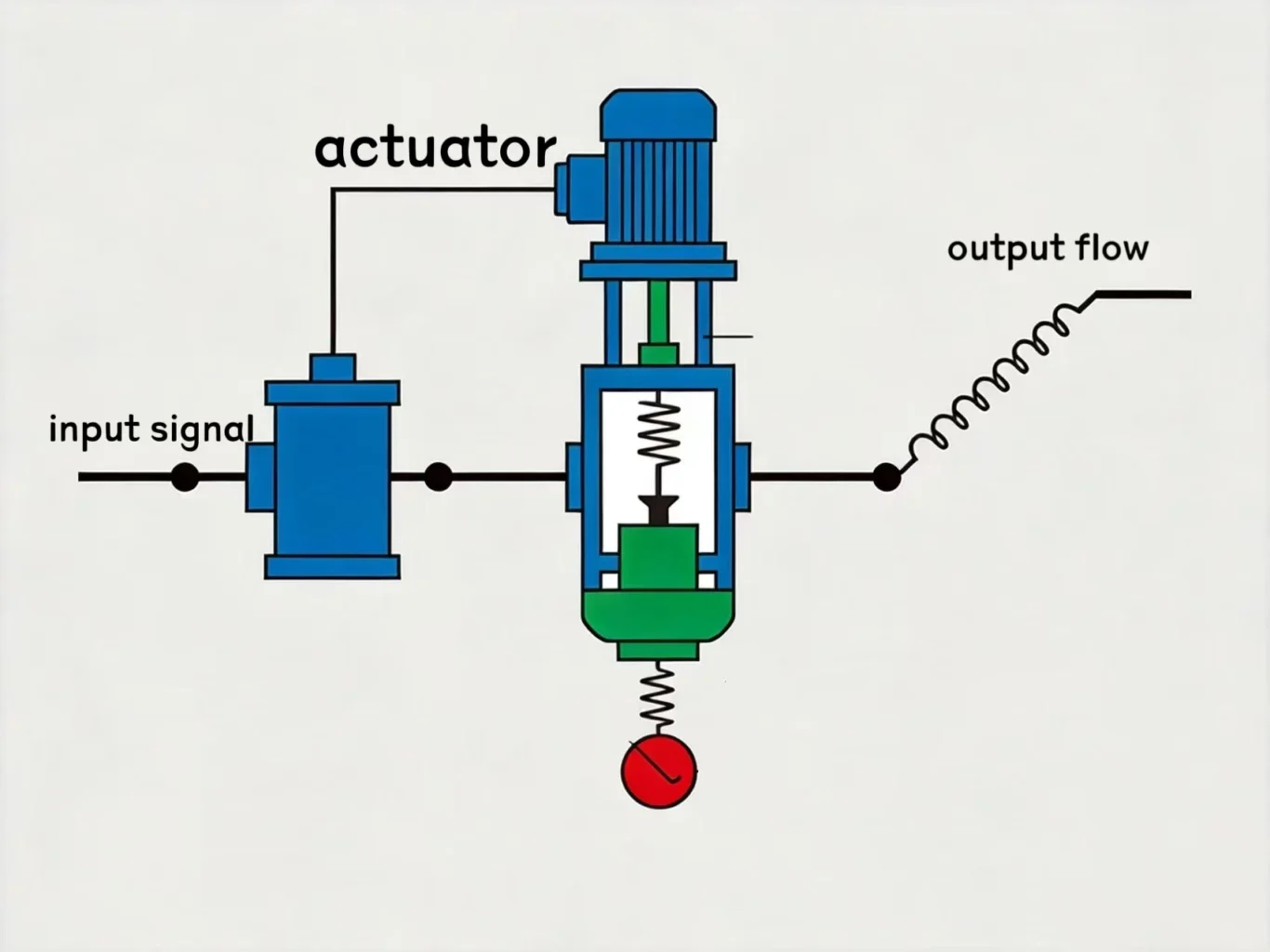
The operating principle of a control valve involves receiving electrical, pneumatic, or other signals from a controller and converting them into power inputs recognizable by the actuator. Subsequently, the power source drives the actuator to overcome spring resistance, fluid unbalance forces, and other factors to produce linear or angular displacement. Then, the valve core changes its relative position with the valve seat according to the displacement, adjusting the flow passage opening to achieve fluid diversion, convergence, or cutoff, thereby completing the parameter regulation.
Classification of Control Valves
Control valves are divided into two main categories: pneumatic actuators and electric actuators (both including linear and rotary types). Pneumatic actuators can be further classified into pneumatic diaphragm actuators, pneumatic piston actuators (divided into single-acting and double-acting cylinders), and others. Pneumatic diaphragm actuators can be in either direct-acting or reverse-acting forms. When the push rod moves downward as the signal pressure increases, it is called a direct-acting actuator; when the push rod moves upward as the signal pressure increases, it is called a reverse-acting actuator.
Pneumatic diaphragm actuators usually receive air signals of 20–100 kPa, although there are also actuators that use signals of 80–200 kPa or 120–300 kPa, with supply pressures generally being 140 kPa, 300 kPa, and 340 kPa respectively. Pneumatic piston actuators typically use an air supply of 400 kPa.
If you would like to learn more about control valves, the blog “Newton Control Valves Revealed” can be helpful to you.
Advantages and Limitations of Control Valves
Advantages
- Flow Regulation: Control valves adjust the flow passage area according to signals from the control system, thereby achieving precise control of flow.
- Process Stability: By compensating for load fluctuations and maintaining target parameters, control valves help maintain the stability of the controlled process.
- Automatic Control: Most modern control valves operate automatically, using electric, hydraulic, or pneumatic actuators to adjust the valve position based on received control signals.
Limitations
- Prominent defects under small opening conditions.
- The risk of fluid damage cannot be completely eliminated.
- High selection and adaptation threshold.
- Rapid decline in long-term operational reliability.
Application Areas of Control Valves
Petrochemical Industry: The sector with the largest demand and the most stringent operating conditions for control valves, with compatible valves accounting for over 40% of the overall market share.
Power and Energy Industry: Covers all types of energy production scenarios including thermal, hydropower, and nuclear power, serving as a core component ensuring the stable operation of generating units.
Municipal and Smart Water Services: The most widely used fluid control component in municipal public works, covering the entire chain of water supply, heating, and wastewater treatment.
Food and Pharmaceutical Industry: Requires extremely high hygienic compliance, serving as a key component to ensure product safety in pharmaceutical production and food processing processes.
New Energy and High-End Manufacturing: One of the fastest-growing emerging sectors in recent years for control valve demand, suitable for specialized process scenarios in photovoltaics, semiconductors, hydrogen energy, and other areas.
General Machinery and Processing: The core control element of hydraulic and pneumatic systems, widely used in equipment such as metallurgical machine tools and construction machinery.
Summary
Control valve systems are core components in various industrial processes, acting as the “gatekeepers” of fluid transportation. These critical devices are responsible for regulating the flow of gases, liquids, and even slurries, thereby ensuring smooth and efficient production operations. VMV Newton is dedicated to providing comprehensive solutions for steam and thermal energy systems. Beyond product services, we also offer on-site surveys, energy-saving diagnostics, full-range product development, project implementation, operational monitoring, and system solutions, all adhering to the principles of sustainable development. Please feel free to contact us if needed.