
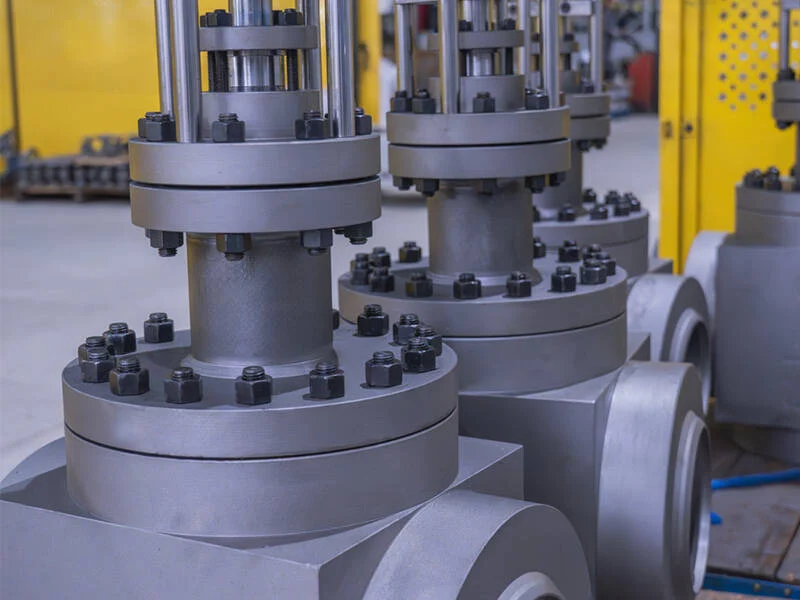
In chemical production processes, thermal oil systems often operate at high temperatures for extended periods. Critical chemical raw materials—such as hydrogen fluoride (HF)—are characterized by extreme toxicity, high corrosivity, and volatility. Any leakage of such media not only disrupts production continuity but also poses severe risks to personnel safety, equipment integrity, and the surrounding environment.
Consequently, valves used in these applications must meet extremely stringent requirements regarding sealing performance, structural reliability, material selection, and the ability to operate stably over the long term.
For valves serving these conditions, the mere ability to open and close is insufficient; the critical requirement is maintaining a stable seal throughout long-term operation to minimize leakage risks.
Selecting the right valve for high-risk media applications is a key topic of interest within the industry. This article analyzes and discusses valve selection across three demanding operating conditions: high temperature and high pressure, highly corrosive environments, and cryogenic (ultra-low temperature) conditions.
High Temperature and High Pressure
Valves operating under high-temperature and high-pressure conditions face two major challenges. The first is temperature; valve materials must be matched to specific temperature ranges to prevent performance degradation or failure. The second is pressure. High-pressure environments demand that valves withstand immense pressure loads; beyond flow control, they must ensure safety by preventing leakage, regulating pressure, and isolating specific system sections.
| Temperature | Valve Material Selection | Pressure | Valve Structure Selection |
| ≤425°C | Select WCB carbon steel; cost-effective with strength sufficient for standard steam and water media. | 10 MPa–20 MPa (Standard High Pressure) | Forged valve body combined with a metal-to-metal hard seal structure; increases pressure-bearing capacity by 30%. |
| 425°C–600°C | Select chrome-molybdenum steel; offers excellent resistance to high-temperature creep. | >20 MPa (Ultra-High Pressure) | Utilize pressure-seal bonnets and RTJ (Ring Type Joint) flanges to prevent external leakage under high pressure. |
| 600°C–1000°C | Use high-temperature resistant stainless steel (e.g., 310S) with carbon content controlled between 0.04% and 0.08%. | High Differential Pressure Conditions | For 3–5 MPa differential pressure, select a cage-guided multi-stage throttling structure; for >10 MPa, a multi-stage labyrinth pressure-reduction structure is mandatory to suppress cavitation and noise. |
| >1000°C | Select nickel-based alloys (e.g., Inconel 625) or utilize a ceramic-lined structure. |
It is important to note that the valve’s pressure rating must exceed the system’s maximum instantaneous pressure—incorporating a 1.5x safety margin—and undergo pressure-temperature rating verification in accordance with the ASME B16.34 standard.
Highly Corrosive Media
Highly corrosive media are often also highly toxic. Safe and reliable operation in such environments requires strict standards for valve sealing and corrosion resistance. VMV’s bellows-sealed globe valves are designed to meet these demanding requirements.
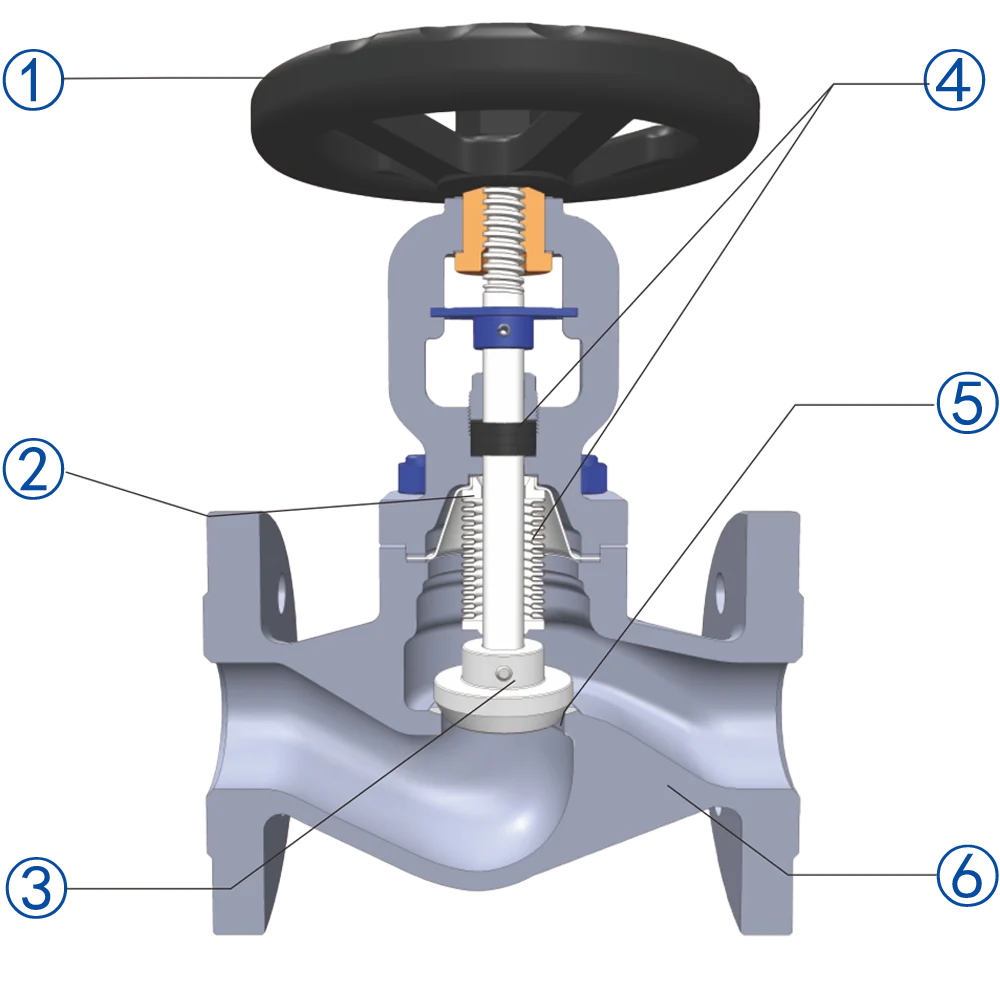
- Ergonomic handwheel design
- Bellows transition connection for enhanced welding quality
- Tapered disc or other custom disc options
- Dual-seal design (bellows + packing)
- Hard-faced sealing surfaces with surface roughness < 0.5 μm
- German resin-coated sand casting process; surface roughness: 12.5–25 μm
VMV bellows-sealed globe valves utilize three sealing methods to ensure zero leakage:
- Tapered seal: Self-cleaning sealing surface that resists impurity adhesion and achieves line-contact sealing.
- Balanced disc seal: Uses a small pilot disc to relieve pressure, allowing the main disc to open effortlessly.
- Flat soft seal: Soft sealing surface prevents sparking during opening and closing; suitable for gaseous media and corrosive applications.
Cryogenic
Cryogenic valves are designed for operation in environments below -150°C (-238°F), typically handling media such as nitrogen, oxygen, or liquefied natural gas (LNG). At cryogenic temperatures, valve design and material selection are critical prerequisites for ensuring proper functionality.
A key feature of cryogenic valves is the extended bonnet design. This design keeps the stuffing box above the cryogenic zone, reducing the risk of packing freeze-up due to heat transfer, ensuring smooth valve operation, and minimizing ice formation around the stem.
Valves are typically constructed from specific alloys, such as stainless steel, to ensure structural integrity and performance in extreme cold.
As a professional valve manufacturer, VMV is driven by technological innovation and grounded in quality. We continuously enhance product performance and service standards, delivering safe and reliable products for applications involving high temperatures, high pressures, high corrosion, and hazardous media.